
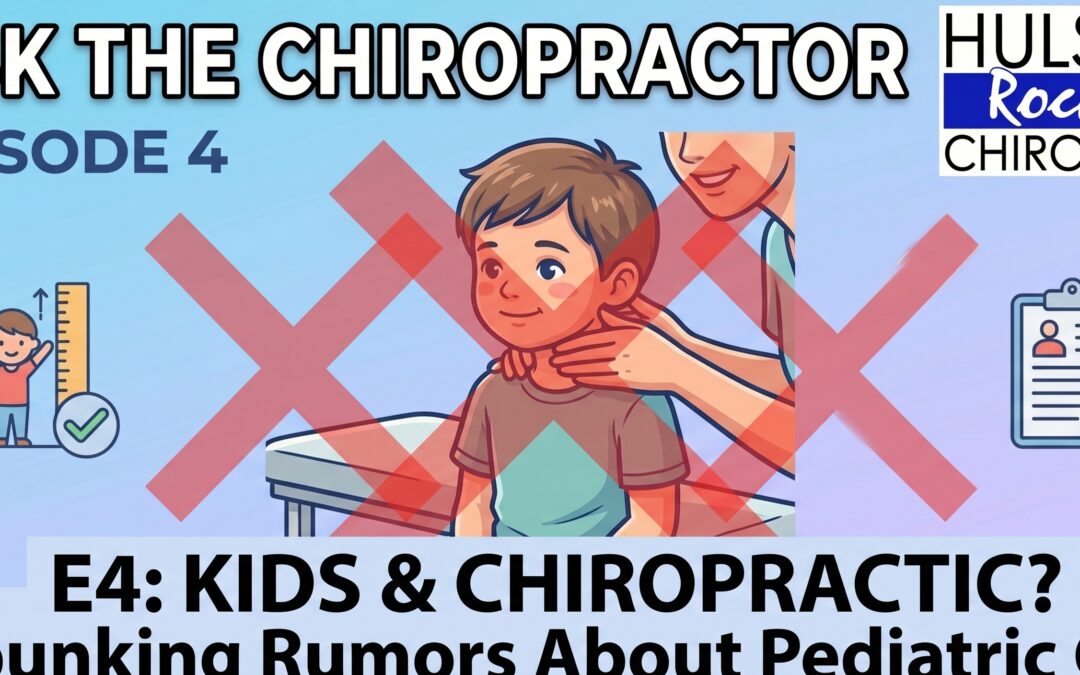
Is Chiropractic Care Safe for Kids and Babies? Debunking the Pediatric Myth
Welcome back to another edition of Ask the Chiropractor! I’m Dr. Brant Hulsebus, practicing right here in Rockford, Illinois, proud graduate of Palmer College of Chiropractic, and team chiropractor for the Rockford IceHogs.
Over the past month, we’ve tackled some of the biggest rumors surrounding our profession: whether adjustments are addictive, why asking an MD about chiropractic care makes little clinical sense, our doctoral education standards, and the truth behind stroke statistics. Today, we’re addressing a claim circulating on social media that defies basic anatomy and clinical science: “Chiropractors shouldn’t treat children, and there is no research behind pediatric chiropractic care.”
Do Kids Have Spines?
I recently watched a spinal surgeon online claim that his number-one “red flag” when evaluating chiropractors was whether they treat children. That is a staggering statement coming from a spinal specialist.
Find me an anatomy textbook anywhere that claims humans do not have a spine until age 18. Can a 14-year-old suffer whiplash in an auto accident, or does trauma suddenly bounce off them until they reach legal adulthood? Of course children have spines, of course they experience physical stress, and of course their biomechanics can become dysfunctional.
Chiropractic care for children is not a modern fad. It has been part of our profession since its beginning in 1895. On my own way home from the hospital after birth, my father—who was a student at Palmer College at the time—brought me directly to the college clinic, where the department head of pediatrics adjusted me in front of the class. That professor later became my teacher, and his son taught me as well. Three generations of my family have been adjusted from birth.
Trained Specifically for Developing Spines
Critics often assume chiropractors treat small children the same way they treat grown adults. As the team chiropractor for professional hockey players with the Rockford IceHogs, I would never evaluate or adjust a two-year-old toddler using the same methods I use on a pro athlete.
Pediatric care requires dedicated, gentle, and specialized techniques:
- Dedicated Curriculum: Palmer College students are required to study pediatric care, and the National Board Exams include a dedicated pediatric section.
- Developmental Assessments: Because infants crawl and develop gross motor milestones long before they walk, we use specialized examination protocols tailored to their nervous systems and growth stages.
- Gentle Pressure: An infant adjustment uses minimal, fingertip pressure—often compared to checking the ripeness of a tomato—rather than the manual thrusts used on mature adults.
- Post-Doctoral Specialization: Chiropractors can complete comprehensive 3- to 5-year diplomate certifications dedicated entirely to pediatric and prenatal care.
“There Is No Literature”: The Research Reality
When someone claims there is no scientific literature on pediatric chiropractic care, it simply proves they have never bothered to look. After lower back pain, neck pain, and headaches, pediatrics is arguably one of the most thoroughly researched topics within the entire chiropractic discipline.
The International Chiropractors Association (ICA) maintains an active Pediatric Council. Advanced credentials in pediatrics require clinical research participation and paper publication, fueling peer-reviewed scientific journals published every single quarter. Our own Rockford clinic has participated directly in multi-clinic clinical outcome studies, collecting parent-reported tracking data before and after adjustments. Anyone can visit chiropractic.org to review this published research firsthand.
Why Do Parents Bring Babies and Children to a Chiropractor?
Parents seek out pediatric chiropractic care for a wide range of developmental and wellness reasons:
- Birth Trauma: The birthing process involves significant traction, rotation, and mechanical pull on an infant’s delicate cervical spine and cranium. Even a normal delivery introduces spinal stress.
- Infant Digestive & Sleep Issues: Misalignments in the upper neck and sacral regions can irritate the autonomic nervous system. Parents routinely bring in infants struggling with colic, latch difficulties, poor sleep, or chronic constipation. In our practice, gentle adjustments frequently produce digestive relief within minutes.
- Milestone Transitions: Moving from tummy time to crawling, and from cruising to walking, puts continuous mechanical stress on young joints. Early assessments help ensure symmetrical movement patterns.
- Faster Healing Timelines: Unlike adults who carry decades of chronic degeneration and scar tissue, children have resilient spines. Misalignments caught early can often be corrected rapidly in just a few gentle visits.
Most newborns we evaluate have healthy, well-aligned spines that require zero intervention. But when a subluxation is present from delivery, clearing that nerve interference early sets the stage for a lifetime of proper neurological and physical development.
Get Your Answers Straight from the Source
Your pediatrician is trained in childhood diseases, acute infections, and emergency pharmacology, but they receive no coursework in manual chiropractic biomechanics. Asking a non-chiropractic provider about chiropractic safety makes as much sense as asking an eye doctor about an ingrown nail.
If you have questions about whether gentle chiropractic care is right for your child, consult a licensed Doctor of Chiropractic with pediatric training.
Tune In Next Week!
Join us next week for Episode 6 as we examine another common myth: The Placebo Effect. Is feeling better after an adjustment simply a mental release of endorphins, or is there measurable neurophysiology at work? We’ll dive into the real science!