
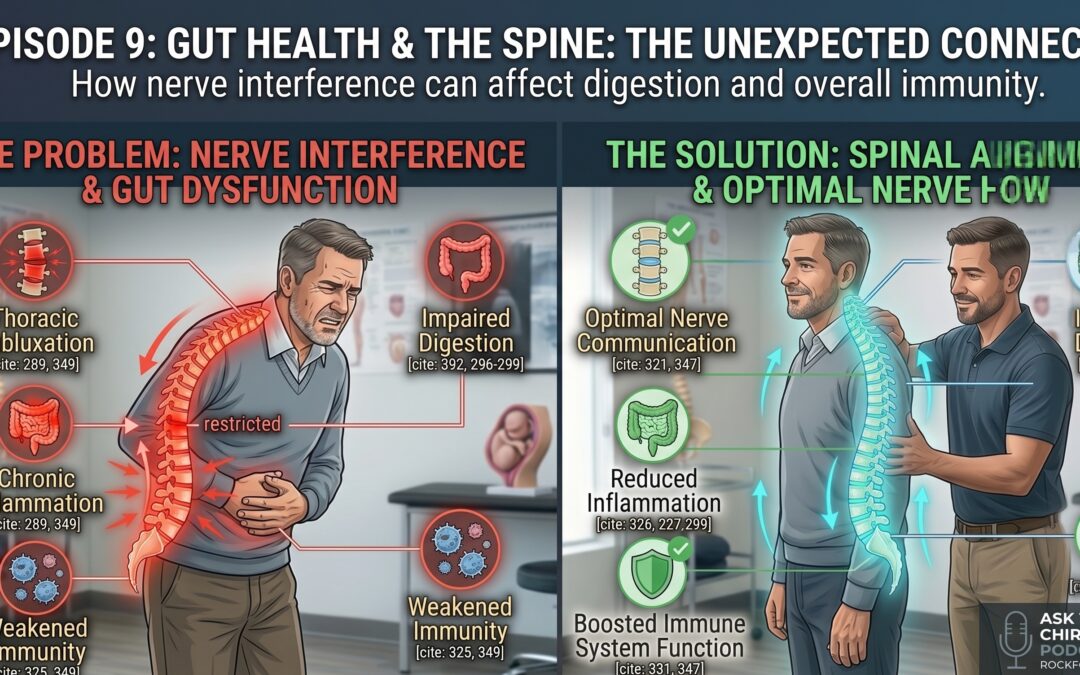
The Gut-Spine Connection: Can Chiropractic Improve Digestion?
Welcome back to Ask the Chiropractor! I am Dr. Brant Hulsebus. Today, we tackle Episode 9 of our 12-week Wellness Lifecycle series. Over the last two weeks, we explored pediatric care and the physical effects of emotional stress. Today, we will look closely at a surprising side effect of poor spinal health. That side effect is digestive issues.
It surprises many people that patients visit my Rockford clinic specifically for gut health. Your spine plays a massive role in digesting food and absorbing nutrients. This remains true whether you struggle with heartburn, constipation, or irritable bowel issues.
More Than Just Digesting Lunch
Recently, especially since COVID-19, we learned the gut does much more than just process meals. The gut and the immune system share an incredibly close relationship.
A healthy gut defends strongly against toxins. However, an unhealthy gut can let toxins slip into your bloodstream. Doctors often call this “leaky gut syndrome.” These escaping toxins create systemic inflammation and can even trigger autoimmune issues. When poor gut function occurs, your entire nervous system and immune response suffer.
The T6 Subluxation: The Hidden Cause of Heartburn
Let’s talk about the specific nerves controlling your digestion. A nerve exits your spine at the T6 vertebrae, right between your shoulder blades. This nerve travels directly to your stomach.
When you eat, nerves in your mouth identify the food. They send a signal to your brain. Your brain then sends a signal down your spinal cord. It exits through the T6 nerve and goes to your stomach. This tells your stomach exactly how much acid to produce for that meal.
What happens if a misalignment, or subluxation, occurs at the T6 vertebrae?
- Your body recognizes the stress at T6. It locks the surrounding muscles to protect the area. This causes tight pain between your shoulder blades.
- Chemicals release from this stress and travel down the nerve root. They signal to the stomach that the body is under stress.
- A stressed stomach responds in one of two ways. It either expels the food through nausea, or it overproduces acid as a fail-safe to ensure digestion.
This extra acid leads to heartburn, indigestion, and GERD. You might earn some heartburn by eating junk food. However, chronic heartburn despite a healthy diet often links directly to a T6 subluxation.
Lower Back Alignment and Bowel Function
Constipation and irritable bowel issues also bring many patients to our office. In Episode 7, I discussed colicky or constipated newborns. A quick pelvic adjustment often helps them have a bowel movement before leaving the clinic.
Nerves exit your lower thoracic spine, upper lumbar spine, and pelvic bones. These nerves directly connect to your small intestines and colon. They dictate the speed of your digestion. Misalignments in these areas can slow your bowels down or speed them up uncomfortably. Targeted adjustments to the lower back and pelvis restore proper nerve flow. This often provides very fast relief for bowel issues.
The Dangers of Malabsorption
You might eat the cleanest, healthiest diet in the world. But nerve interference can stop your GI system from functioning properly. As a result, you cannot absorb those healthy nutrients.
When your body fails to absorb nutrients, it becomes chronically inflamed inside. This systemic inflammation turns minor aches and pains into major, debilitating issues. Removing subluxations restores nerve function to your GI system. This allows you to actually absorb your food. It also helps your body heal from the inside out.
The 12-Week Wellness Series
Previous Episode: Episode 8: The Physics of Stress
Current Episode: Episode 9: Gut Health & Digestion
Next Week: Episode 10: Healthy Aging
Have you tried probiotics, prebiotics, and endless diet changes without finding relief? It might be time to look under the hood. Contact our Rockford clinic today to schedule an evaluation. Let’s see if a spinal subluxation causes your digestive struggles.